If you still haven’t received your Christmas presents, don’t worry – Google is handing out lawsuits under the tree this year.
As an SEO Expert who’s spent 10+ years navigating the evolving relationship between search engines, publishers, and data access, I read Google’s lawsuit against SerpApi and couldn’t help but appreciate the irony.
The Official Story: Noble Intentions
On the surface, this is all about protecting publishers, respecting robots.txt, and fighting malicious scrapers. Very noble goals that any ethical SEO professional would support.
Google’s position? They’re defending the rights of content creators and maintaining the integrity of the web ecosystem.
Heartwarming stuff.
The Unofficial Story: Control Over Access
But let’s be honest – this isn’t really a story about defending websites.
It’s a story about who controls access to data.
SerpApi isn’t some random basement operation scraping Google for fun. It’s critical infrastructure used by:
- Competing LLMs and AI tools
- SEO platforms and analytics companies
- Businesses building alternative ways to understand and analyze search results
- Developers creating innovations outside Google’s ecosystem
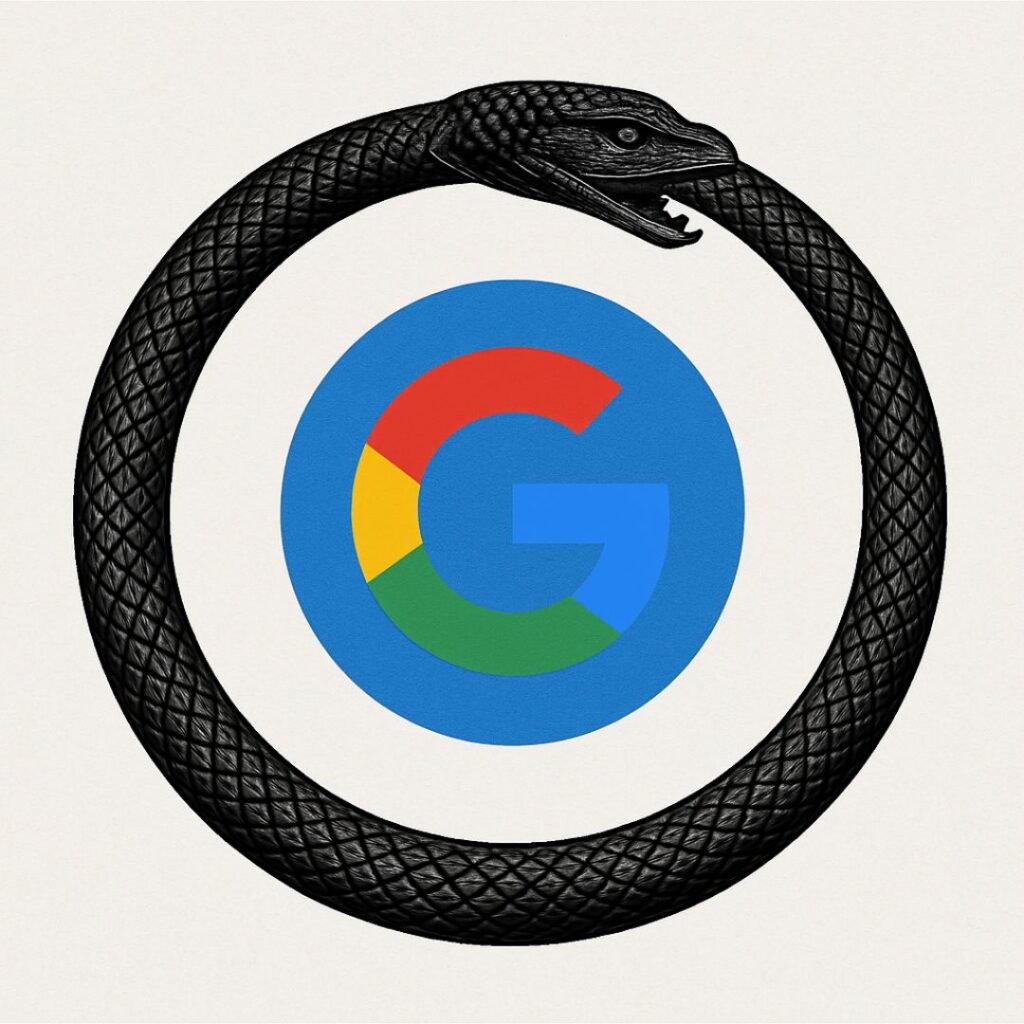
And Google’s message couldn’t be clearer: SERP data is public… as long as we are the ones reading it.
The Irony is Chef’s Kiss 😘
Here’s what makes this particularly amusing from an SEO perspective:
Google – a company that has:
- Scraped the entire web for decades to build the world’s dominant search engine
- Monetized other people’s content via featured snippets, knowledge panels, and zero-click searches
- Reduced publisher traffic by 40-60% in many verticals by answering queries directly
- Now uses AI to synthesize content without sending meaningful traffic to sources
…suddenly positions itself as the champion defender of content owners’ rights.
The moral high ground has never looked quite so… strategic.
What This Really Means for SEO and Tech
From a technical SEO and business strategy perspective, this lawsuit reveals three clear principles:
1. AI is fine – as long as it’s our AI
Google’s own AI Overview and Gemini can scrape, synthesize, and present information from across the web. But third-party AI tools accessing the same public data? That’s apparently crossing a line.
2. Data access is fine – as long as it’s licensed
Google wants to control not just the search experience, but the entire pipeline of how search data flows to other applications and innovations.
3. Innovation is welcome – as long as we control the infrastructure
Build on our platform, use our APIs, play by our rules. Build alternative infrastructure to access public search results? Lawsuit incoming.
The Real Battle: Access to Information
This lawsuit isn’t about good versus evil, ethics versus exploitation, or protecting publishers versus harming them.
It’s about controlling the fuel that powers AI, SEO tools, competitive intelligence, and the future of search itself.
Think about it:
- Publishers already lost the battle for traffic when Google started answering queries directly
- SEO tools need search data to provide value to clients
- AI companies need training data and real-time search context
- Businesses need competitive intelligence to make strategic decisions
Who gets to access that data, under what terms, and at what cost? That’s the real question here.
What Changed?
For years, accessing SERP data through APIs and scrapers existed in a gray zone. Google didn’t love it, but seemed to tolerate it as part of the ecosystem.
What changed? The stakes got exponentially higher.
With AI becoming the next frontier of tech dominance, search result data isn’t just valuable for SEO anymore – it’s training data, it’s context for LLMs, it’s the foundation for competing search experiences.
Google isn’t suing SerpApi because they’re suddenly concerned about robots.txt compliance.
They’re suing because alternative access to search data threatens their ability to be the sole gatekeeper to how AI understands and presents information.
The SEO Implications
For those of us working in technical SEO and digital strategy, the implications are clear:
The old model:
- Google crawls your site
- You optimize for their algorithm
- They send you traffic (maybe)
- Everyone builds tools around understanding Google
The emerging model:
- Google crawls your site
- AI synthesizes your content
- Traffic decreases dramatically
- Access to search data gets locked down
- Alternative paths to visibility get legally challenged
We’re not just optimizing for algorithms anymore. We’re operating in an ecosystem where the rules of data access, AI training, and information distribution are being actively litigated.
So What Did Google Give Us for Christmas?
Not socks. Not chocolate. Not even coal.
But a very clear reminder that:
Search is no longer just about links and rankings.
It’s about who owns, controls, and monetizes access to information itself.
And Google intends to be the one holding the keys.

Written by Peter Sawicki, an experienced strategist with a background spanning multiple industries, from private enterprises to government projects. Having worked across different countries and markets, I bring a global perspective and practical insights to every SEO strategy I design. As a diver and adventure seeker, I’ve learned to balance attention to detail with a drive to explore new solutions, a mix that shapes both my work and my life.