
I have installed, configured, and migrated between RankMath and Yoast on more than 40 tourism websites over the past five years. Hotels, DMOs, tour operators, dive centers, and activity providers. The question I get asked most often is simple: which one should I use?
The answer depends on what you actually need. Both plugins work. Neither will magically fix your rankings. But for tourism websites specifically, there are meaningful differences that matter for your schema markup, local SEO, redirect management, and overall workflow. Here is what I have learned from real implementations.
The Core Difference: Philosophy and Business Model
Yoast has been around since 2010. It is the default choice, the plugin most developers install without thinking. The free version covers basics, but critical features like redirects, internal linking suggestions, and advanced schema require Yoast Premium at $99 per year per site.
RankMath launched in 2018 with a different approach. The free version includes features that Yoast locks behind a paywall. Their business model relies on upselling the Pro version ($59 per year) for features like advanced schema templates, Google Analytics integration, and 24/7 support.
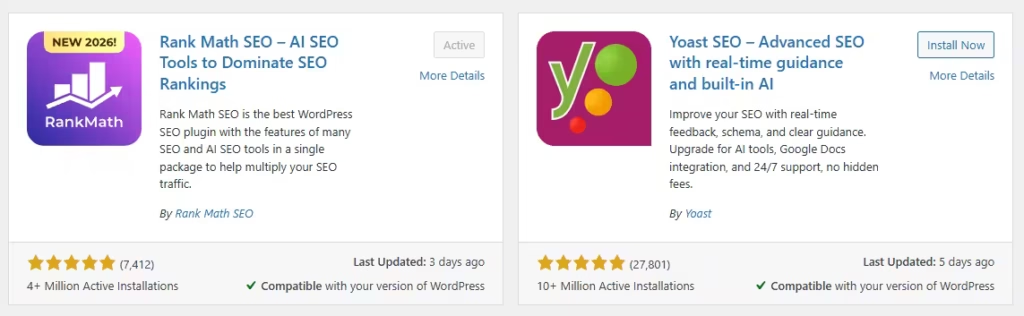
For a single tourism website, this price difference matters less than feature access. A boutique hotel does not need enterprise features. But if you manage multiple properties or a DMO with dozens of microites, the cost difference becomes significant.
Schema Markup: Where RankMath Wins for Tourism
Schema markup is where I see the biggest practical difference for tourism sites. Google uses structured data to generate rich results, and tourism has specific schema types that matter: LocalBusiness, TouristAttraction, LodgingBusiness, Event, and Review.
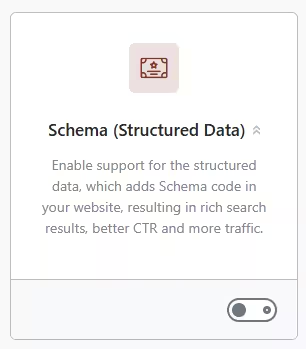
RankMath includes a built-in schema generator in the free version. You can add multiple schema types per page, customize fields, and preview the output. When I set up a dive center’s website, I can mark the business page with LocalBusiness schema, add TouristDestination for location pages, and stack Review schema on testimonial sections. All without writing JSON-LD manually.
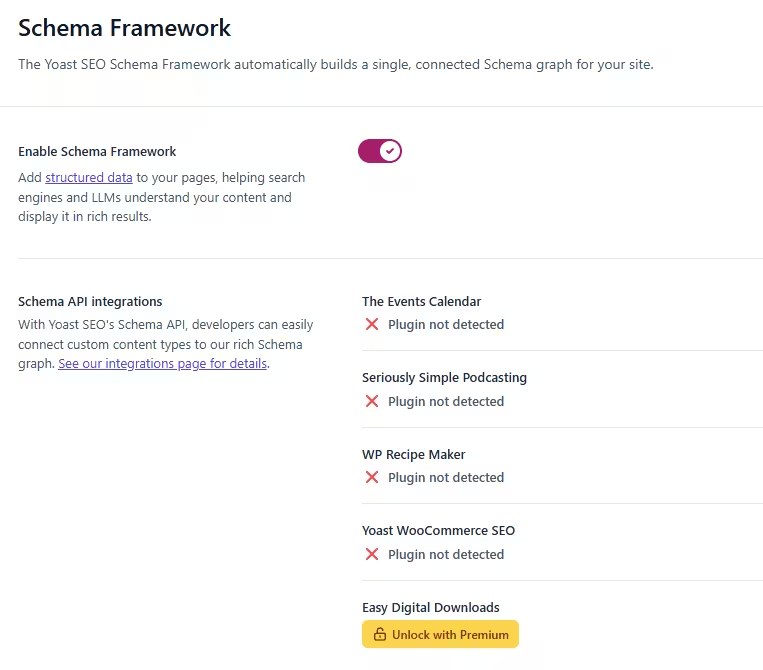
Yoast’s free version handles basic Article and WebPage schema automatically but offers limited control. For LocalBusiness schema with tourism-specific properties, you need Yoast Local SEO (an additional $79 per year add-on) or custom code. Most tourism clients I audit are running Yoast free with no schema beyond the defaults.
Schema Implementation Comparison
Here is what each plugin handles out of the box for tourism use cases:
- RankMath Free: Article, LocalBusiness, Product, Event, Recipe, Service, FAQ, HowTo, Person, Organization. Custom schema builder available.
- Yoast Free: Article, WebPage, Organization, Person, Breadcrumb. No LocalBusiness without add-on.
- RankMath Pro: Adds schema templates, advanced local business options, review schema from multiple sources.
- Yoast Premium + Local: Comparable LocalBusiness support, but requires two purchases totaling $178 per year.
Redirect Management: A Critical Feature for Tourism Sites
Tourism websites change constantly. Seasonal pages get updated, tour packages get renamed, old promotions expire, and URLs shift during redesigns. Without proper redirects, you lose link equity and send visitors to 404 pages.
- RankMath includes a redirect manager in the free version. You can create 301, 302, 307, 410, and 451 redirects directly in WordPress. It also auto-detects 404 errors and suggests redirects.
- Yoast requires Premium ($99) for redirect functionality. The free version offers nothing. Most small tourism businesses I work with are running Yoast free plus a separate redirect plugin like Redirection, which creates plugin bloat and potential conflicts.
For a hotel client with 200+ seasonal landing pages that change URLs annually, having built-in redirect management saves hours of work and reduces the risk of broken redirect chains. This alone justified switching from Yoast to RankMath for three of my tourism clients last year.
Local SEO Features: Mixed Results
Local SEO matters for tourism. Guests search for hotels near me, best diving in [location], and things to do in [destination]. Your Google Business Profile matters more than your on-page optimization in many cases, but your website still needs proper local signals.
- RankMath includes local SEO features in the Pro version: multiple locations, business hours, schema for each location, and Maps integration. It is good but not exceptional.
- Yoast Local SEO ($79 per year add-on) offers similar functionality with slightly more polished implementation for multi-location businesses. If you operate a hotel chain with 15 properties, Yoast Local handles the complexity better than RankMath.
For single-location tourism businesses, RankMath Pro covers everything you need. For multi-location operations, Yoast Local has an edge, but you are paying significantly more for the full stack.
Google Business Profile Integration
Neither plugin directly syncs with Google Business Profile. Both help you maintain consistent NAP (Name, Address, Phone) information on your website, which supports local ranking signals indirectly. Do not expect either plugin to manage your GBP listing.
Content Analysis: Different Approaches, Similar Results
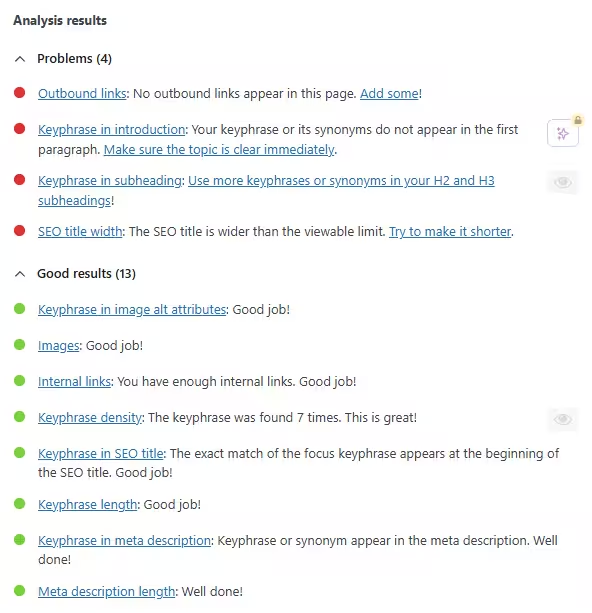
Both plugins analyze your content and provide recommendations. Keyword density, readability scores, meta description length, internal links. The fundamentals are identical.
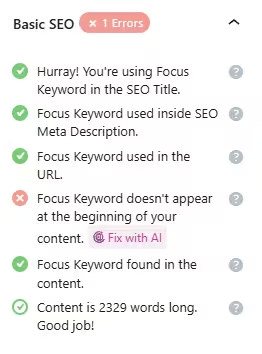
- RankMath uses a 0-100 score system. Green means good. It checks for keyword in title, headings, URL, content, and meta description. The free version tracks one focus keyword per post. Pro allows multiple keywords.
- Yoast uses red, orange, and green traffic lights. It checks the same fundamentals with slightly different weighting. Premium tracks multiple focus keywords and includes advanced readability analysis.
Honestly, both content analysis tools are fine and neither is great. I have seen tourism clients obsess over getting a perfect score while ignoring actual search intent. A green light from RankMath does not mean your content will rank. A perfect Yoast score does not mean you have answered what travelers actually want to know.
Use these tools as checklists, not as success metrics.
Performance and Site Speed Impact
Both plugins add weight to your WordPress installation. In my testing across tourism sites, the difference is minimal when properly configured.
RankMath tends to be slightly lighter because it consolidates functionality that Yoast splits across multiple add-ons. Running Yoast Premium plus Yoast Local plus Yoast Redirects creates more database queries than RankMath Pro alone.
For a typical tourism site on decent hosting, neither plugin will noticeably affect page speed. If you are running shared hosting with 15 other plugins, RankMath’s consolidated approach may give you a slight edge.
Migration Between Plugins
Switching from Yoast to RankMath is straightforward. RankMath includes a one-click migration tool that imports your meta titles, descriptions, focus keywords, and redirect rules. I have done this migration on sites with 500+ pages without losing data.
Moving from RankMath to Yoast requires the SEO Data Transporter plugin, and the process is less smooth. Some schema configurations do not transfer cleanly.
If you are currently on Yoast and considering a switch, the migration risk is low. If you are on RankMath and happy, there is little reason to move to Yoast.
My Recommendation for Tourism Websites
For most tourism websites, I recommend RankMath. The free version includes schema markup and redirects that Yoast charges extra for. The learning curve is minimal if you are already familiar with Yoast’s interface.
Choose Yoast if:
You operate a multi-location tourism business (hotel chain, tour operator with multiple bases) and need polished multi-location local SEO. The Yoast Local add-on handles this better. You are also already running Yoast and have no significant issues. Migration has costs, even when it is simple.
Choose RankMath if:
You need schema markup beyond basic Article schema without paying extra. You want built-in redirect management. You are starting a new tourism site and want maximum functionality from day one. Budget matters and you want to avoid paying for multiple Yoast add-ons.
For the dive operations, boutique hotels, and DMO microsites I typically work with, RankMath delivers more value at lower cost. The schema builder alone justifies the choice for tourism use cases.
What Actually Matters More Than Your Plugin Choice?
Your SEO plugin is a tool, not a strategy. I have audited tourism sites running Yoast with excellent technical SEO, and sites running RankMath with catastrophic issues. The plugin did not cause the difference. The implementation did.
What matters more than which plugin you choose:
Proper site architecture that matches how travelers search. Schema markup that accurately represents your business. Content that answers real traveler questions at each stage of the booking journey. Page speed optimization, especially for mobile users booking from phones. A Google Business Profile that is complete, accurate, and actively managed.
RankMath or Yoast will help you implement these fundamentals. Neither will do the strategic work for you.
Frequently Asked Questions
Is RankMath really free or are essential features locked?
The free version of RankMath includes schema markup, redirect management, and single keyword tracking. These features require paid add-ons in Yoast. The Pro version ($59 per year) adds advanced schema templates, multiple keyword tracking, and priority support. For most single-location tourism businesses, the free version covers 90% of needs.
Will switching from Yoast to RankMath hurt my rankings?
No. The migration transfers your meta titles, descriptions, and other SEO data. Your rankings depend on your content and backlinks, not which plugin generates your meta tags. I have migrated 15+ tourism sites from Yoast to RankMath with no ranking drops when done correctly.
Which plugin is better for hotel schema markup?
RankMath handles LodgingBusiness schema better in the free version. Yoast requires the Local SEO add-on for comparable functionality. For hotels that want rich results showing amenities, reviews, and booking links, RankMath provides more control without additional cost.
Do I need both RankMath and a separate schema plugin?
No. RankMath’s built-in schema builder handles all standard tourism schema types including LocalBusiness, Event, FAQ, and Review. Adding a separate schema plugin creates conflicts and duplicate markup. Use one or the other, not both.
Which plugin works better with Elementor and other page builders?
Both plugins integrate with major page builders including Elementor, Divi, and Beaver Builder. RankMath’s Elementor integration is slightly smoother because it reads content from within the builder. Yoast sometimes requires saving the page before analysis updates. Neither has significant compatibility issues with modern page builders.
Get Your Tourism Site Reviewed
Choosing between RankMath and Yoast is one decision among hundreds that affect your tourism site’s organic visibility. If you want an honest assessment of your current setup, including schema implementation, technical health, and content gaps, I offer technical SEO audits specifically for tourism and hospitality businesses. Contact me for a consultation.

About the Author
I’m Peter Sawicki, a Destination SEO Strategist helping tourism brands and DMOs grow their online presence through SEO, technical audits, and creative digital strategies. Over the years I’ve worked across multiple countries and markets, which gives me a global perspective on every project I take on. When I’m not optimizing websites, you’ll most likely find me underwater. Scuba diving is where my two biggest passions meet.