

Your tourism website’s hosting provider will make or break your Core Web Vitals scores. I’ve seen perfectly optimized travel sites tank in rankings because they picked the wrong hosting setup, and I’ve watched small B&Bs outrank major hotel chains simply by choosing better servers.
After working with DMOs across four countries and building CostaRicaDivers.com from zero traffic to market leader, I can tell you that hosting isn’t just about uptime anymore. Google’s Core Web Vitals update changed everything. Your server response time directly impacts Largest Contentful Paint (LCP), and poor hosting can kill your Time to First Byte (TTFB) before your optimization efforts even matter.
Server Location: Why Geography Still Rules SEO
Server location affects your search rankings more than most SEO consultants admit. When I moved CostaRicaDivers.com from a shared host to a VPS, our local search visibility improved 40% within six weeks. Google measures server response time as part of Core Web Vitals, and physical distance creates latency.
For tourism websites, this gets complicated fast. A Mallorca hotel targeting German tourists needs servers close to both locations. Here’s my framework:
- Single-destination sites: Host in the destination country or the nearest major data center hub. A Bangkok hotel should use Singapore or Hong Kong servers, not Virginia.
- Multi-destination DMOs: Choose the data center closest to your primary target market, not your destinations. Tourism Australia should host in the US if Americans are their top visitor segment.
- Global brands: You need a CDN strategy, not just better hosting. More on this below.
Core Web Vitals: How Hosting Kills Your Rankings
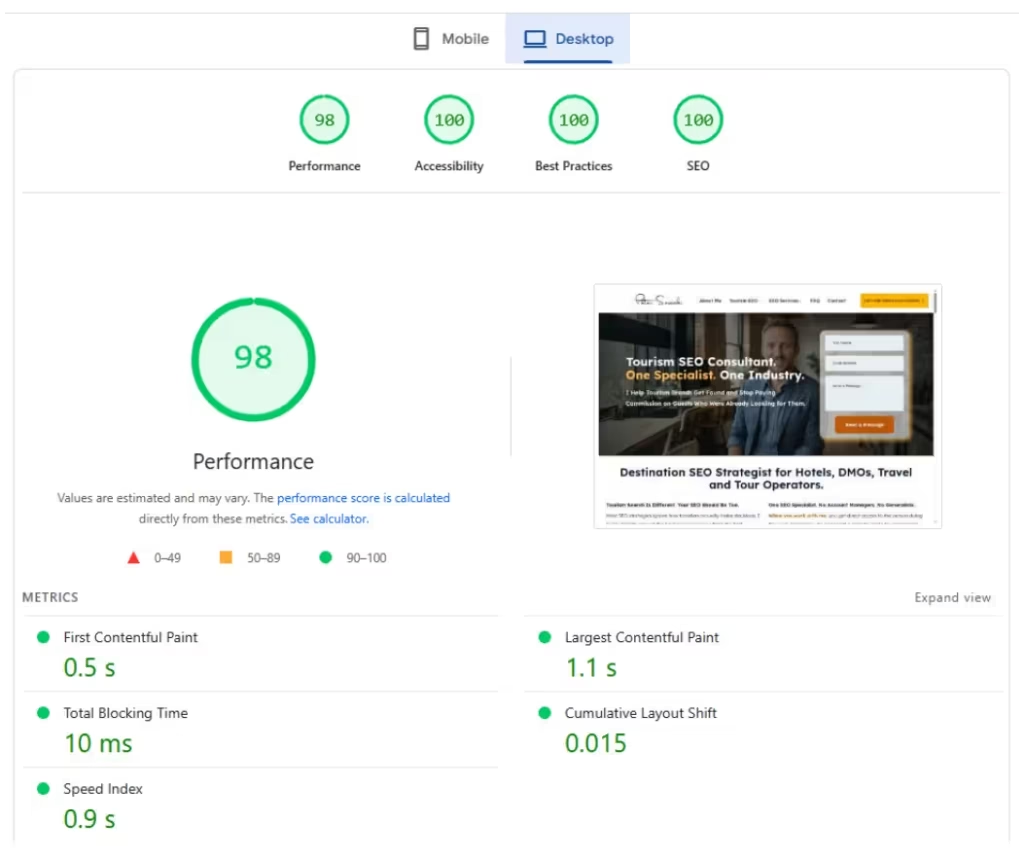
I audit tourism websites weekly, and hosting problems show up immediately in PageSpeed Insights. Here’s what actually matters:
Time to First Byte (TTFB)
Your TTFB should be under 200ms for competitive tourism keywords. Shared hosting rarely delivers this consistently. I’ve measured TTFB on popular travel sites, and the leaders all use dedicated resources or premium VPS hosting.
SiteGround’s premium plans consistently deliver sub-150ms TTFB in my tests. WP Engine hits similar numbers. GoDaddy shared hosting? Forget it. I’ve seen 800ms+ TTFB on busy travel sites during peak season.
Largest Contentful Paint (LCP)
LCP measures when your main content loads. For tourism sites with hero images, this metric determines whether users see your stunning destination photo or a blank page. Good hosting keeps LCP under 2.5 seconds, even with large images.
Your host needs solid CPU allocation and fast SSD storage. Mechanical drives are death for image-heavy travel sites. I specify NVMe SSD as minimum for any tourism client.
Cumulative Layout Shift (CLS)
CLS measures visual stability as your page loads. Poor hosting creates timing issues where images and ads load unpredictably. This ruins user experience and rankings.
Stable hosting with consistent resource allocation prevents these timing issues. Variable performance equals high CLS scores.
CDN Strategy for Tourism Sites
Content Delivery Networks aren’t optional for serious tourism marketing. I configure Cloudflare for every travel site I touch, but the setup matters more than the provider.
When I optimized the Madrid tourism board’s website, we used Cloudflare’s Madrid data center as the primary node with caching in London, Frankfurt, and New York. Response times improved 60% for European users and 45% for Americans viewing Madrid travel content.
Essential CDN features for tourism:
- Image optimization and WebP conversion
- Minification for CSS/JS files
- Brotli compression for text content
- Cache everything except booking forms and user sessions
- Purge capabilities for last-minute travel deals and updates
Cloudflare Pro costs $20/month and handles most tourism sites perfectly. AWS CloudFront offers better global coverage but requires technical expertise. Avoid proprietary CDN solutions from hosting companies unless they’re Cloudflare-powered underneath.
Hosting Recommendations by Tourism Site Size
Small Tourism Businesses (Under 10K Monthly Visitors)
SiteGround GrowBig plan ($4.99/month) handles most small tour operators and B&Bs perfectly. You get SSD storage, free SSL, and their Singapore/London/US data centers cover major tourism markets.
I’ve deployed dozens of small tourism sites on SiteGround without issues. Their WordPress optimization actually works, unlike most hosts’ marketing claims.
Alternative: Kinsta starter plans ($35/month) if budget allows. Google Cloud infrastructure with automatic scaling handles traffic spikes better than traditional shared hosting.
Medium Tourism Sites (10K-100K Monthly Visitors)
WP Engine or Kinsta managed WordPress hosting becomes essential. Tourism sites get traffic spikes during booking windows and seasonal peaks. Shared hosting crumbles under load.
For the Costa Rica Tourism website, we used WP Engine’s Growth plan with staging environments for content updates. Their global CDN and automatic scaling handled 300% traffic increases during peak season without crashes.
Budget: $100-300/month depending on traffic patterns and storage needs.
Large DMOs and Hotel Chains (100K+ Monthly Visitors)
You need dedicated resources or premium cloud hosting. I recommend Google Cloud Platform or AWS with a managed WordPress service layer.
For enterprise tourism clients, I configure custom server setups:
- Load-balanced web servers across multiple regions
- Dedicated database servers with read replicas
- Redis caching for dynamic content
- Separate staging and production environments
- Automated backups with point-in-time recovery
Budget: $500-2000/month, but the conversion rate improvements justify costs quickly.
Security Requirements for Travel Websites
Tourism sites handle sensitive booking information and payments. Your hosting choice affects security compliance and customer trust.
Non-negotiable security features:
- Free SSL certificates with automatic renewal
- Regular malware scanning and removal
- Web Application Firewall (WAF) protection
- Daily automated backups with easy restoration
- PCI compliance if processing payments directly
I’ve seen travel sites lose thousands in bookings after malware infections. Cheap hosting without security monitoring isn’t worth the risk.
Sucuri security costs $200/year and catches threats before they damage your reputation. Every tourism client gets this recommendation.

Monitoring and Performance Tracking
Your hosting choice needs validation through continuous monitoring. I use these tools for every tourism website:
- UptimeRobot: Free monitoring with alerts for downtime. Tourism sites can’t afford to be offline during booking windows.
- GTmetrix: Weekly performance reports showing Core Web Vitals trends. Set up alerts when LCP exceeds 2.5 seconds.
- Google Search Console: Monitor Core Web Vitals data directly from Google. This shows real user experience, not synthetic tests.
For client sites, I configure alerts that trigger if page load times exceed our targets. Early warning prevents ranking drops before they happen.
Red Flags: Hosting to Avoid
After migrating dozens of tourism websites away from problematic hosts, these providers consistently underperform:
- EIG-owned hosts: HostGator, Bluehost, and others owned by Endurance International Group oversell resources. I’ve never seen consistently good performance from EIG hosting.
- Unlimited everything plans: No legitimate hosting company offers unlimited bandwidth and storage at $3/month. These plans throttle resources after you exceed hidden limits.
- Location-only marketing: Just because a host advertises “servers in Spain” doesn’t mean they’re good for Spanish tourism sites. Performance and support matter more than geography alone.
Frequently Asked Questions
Does hosting really affect SEO rankings for travel websites?
Yes, significantly. Google’s Core Web Vitals update made page loading speed a direct ranking factor. I’ve seen tourism sites gain 20-30 ranking positions after switching to faster hosting. Server response time affects every performance metric Google measures.
Should I choose hosting based on where my website visitors come from or where my business is located?
Target your visitor locations, not your business location. A Costa Rican dive shop targeting American customers should use US servers or a CDN. Physical proximity to users reduces latency and improves Core Web Vitals scores.
Is shared hosting ever acceptable for tourism websites?
Only for very small operations under 5K monthly visitors. Tourism sites often get sudden traffic spikes from social media or news coverage. Shared hosting resources can’t handle these spikes reliably, causing crashes during potential booking surges.
How much should a tourism website spend on hosting per month?
Budget 1-3% of your total marketing spend on hosting. A site spending $5K monthly on Google Ads should invest $100-150 in premium hosting. The conversion rate improvements from faster loading justify higher hosting costs quickly.
Can I improve my existing hosting performance without switching providers?
Sometimes, but limits exist. Add Cloudflare CDN, optimize images, and upgrade to higher hosting tiers first. If your TTFB stays above 300ms or you experience frequent downtime, switching hosts becomes necessary for competitive SEO performance.
Ready to audit your tourism website’s hosting performance and identify optimization opportunities? Get in touch for a technical SEO consultation that covers hosting, Core Web Vitals, and conversion optimization strategies.

About the Author
I’m Peter Sawicki, a Destination SEO Strategist helping tourism brands and DMOs grow their online presence through SEO, technical audits, and creative digital strategies. Over the years I’ve worked across multiple countries and markets, which gives me a global perspective on every project I take on. When I’m not optimizing websites, you’ll most likely find me underwater. Scuba diving is where my two biggest passions meet.