
Over the past two years, I’ve reviewed more than 50 Google business profiles in the travel industry. The pattern is often the same. Companies either completely ignore reviews or respond to them in the wrong way. They reply with cookie-cutter, copy-and-paste responses, which makes it seem like they don’t care at all. Or they get too emotional about it…
Your responses to Google reviews are public. They influence how potential customers perceive your business even before they visit your website. They also affect your rankings in local search results. In this guide, I explain exactly how to respond to both positive and negative reviews in a professional manner while keeping SEO in mind.
Why Review Responses Matter More Than You Think?
Google has confirmed that responding to reviews is a ranking factor for local search. But that is not even the main reason to care. When someone searches for your hotel or tour company, your Google Business Profile often appears before your website. The reviews section is one of the first things they see.
When I worked with CostaRicaDivers.com, we received a variety of reviews. Most were positive, but of course there were some negative ones, which were often exaggerated in order to cause as much harm as possible. The reality is that a happy customers go home and forget about you.
Unhappy ones? They’re typing that one-star review before they even reach their hotel. Pure emotion. Pure spite. That very human ‘watch me’ moment.
A fake negative review that attracted customers
When we first started out, we received a one-star review that was fake and posted by our competitors. How do I know this? Because years later, the manager of that business accidentally admitted it himself.
The appeal didn’t help, and that negative review really dragged down our average rating. And for a startup, that can be very hurtful. Despite my anger, I had no choice but to respond to this review in the most professional manner possible.
A few months later, we had a client who used our services for several days in a row. During a casual conversation, he admitted that, in addition to the company’s overall professional image, what ultimately convinced him was that very response to the negative review.
What Potential Guests Actually Notice
When I run user research for tourism clients, I ask people what they look for in reviews. The answers are consistent:
- How recent are the reviews? Old reviews suggest the business might have changed.
- How does the business handle complaints? This predicts how they will handle problems during my stay.
- Do the responses sound human? Generic replies signal that the business does not actually read feedback.
- Are there patterns in negative reviews? If three people mention slow check-in, that is probably a real issue.
Your responses should address all of these points. A well-thought-out response to a complaint shows that you take feedback seriously. Referring to specific details from the review demonstrates that you’ve actually read it.
How to Respond to Positive Reviews
Positive reviews are the easy ones, yet most businesses still get them wrong. The typical response looks like this: “Thank you for your kind words! We hope to see you again soon.” This adds nothing. It could be written by a bot. It probably was.
The Anatomy of a Good Positive Review Response
Every positive review response should include three elements:
- Personalization: Reference something specific from their review. If they mentioned the breakfast, talk about the breakfast. If they mentioned your guide named Maria, mention Maria by name.
- Reinforcement: Subtly highlight what makes you different. This is not about stuffing keywords but about reminding future readers what you offer.
- Invitation: Give them a reason to come back or try something they missed.
Templates for Positive Review Responses
Template 1: For Reviews That Mention Specific Staff
“Hi [Name], thank you for taking the time to share your experience. I will make sure [Staff Name] sees this, as it will absolutely make their day. Our team puts a lot of effort into [specific thing they do], so it means a lot when guests notice. If you make it back to [Location], our [other experience or amenity] is worth trying. Safe travels.”
Template 2: For Reviews That Mention a Specific Experience
“[Name], glad to hear the [specific activity or feature] lived up to expectations. [Add one sentence of context about why that experience is special or what goes into it]. We would love to have you back for [related experience]. Thanks for the review.”
Template 3: For Short Generic Positive Reviews
“Thanks [Name]. Appreciate you leaving a review. Hope to see you again next time you are in [Location].”
Notice that Template 3 is intentionally short. When someone leaves a brief “Great place!” review, a long response looks disproportionate and slightly desperate.
Real Example: What a Good Response Looks Like
I pulled this from a dive shop in Thailand that consistently converts well from their GBP:
Original review
“Amazing dive trip to Koh Tao! Our instructor Paolo was patient with my wife who was nervous about her first dive. The boat was clean and the lunch was surprisingly good. Will definitely come back.”
Response
“Thanks for diving with us, Mark. Paolo is one of our most experienced instructors for newer divers, so I am glad he helped your wife feel comfortable. The boat crew takes pride in those lunches, so I will pass along the compliment. If you make it back to Koh Tao, the night dive is worth trying once you have a few more dives under your belt. Safe travels to you both.”
This response hits every element: mentions Paolo by name, reinforces that they are good with nervous divers (a key concern for many first-timers), and suggests a reason to return.
How to Respond to Negative Reviews
Negative reviews are where most tourism businesses panic. The instinct is either to get defensive or to over-apologize. Both approaches backfire.
Here is the reality: a negative review handled well can actually increase bookings. Potential guests know that no business is perfect. What they want to see is how you handle problems when they occur. A professional, empathetic response to a complaint builds more trust than a wall of five-star reviews with no criticism.
Do you remember what I mentioned above?
The Framework for Negative Review Responses
- Step 1: Acknowledge without being defensive. Do not explain why they are wrong. Even if they are wrong. Your response is not for this one person. It is for the hundreds of potential guests who will read it later.
- Step 2: Apologize for their experience, not necessarily for fault. There is a difference between “I am sorry we did not meet your expectations” and “I am sorry you feel that way.” The second one sounds dismissive. The first takes ownership.
- Step 3: Explain context only if it helps future guests. If there was construction next door and it is now finished, mention that. If the issue was a one-time problem, say so. But do not make excuses.
- Step 4: Offer to continue the conversation privately. Provide a direct email or phone number. This shows you want to resolve it, and it moves any further back-and-forth off your public profile.
- Step 5: Keep it short. Long defensive responses look worse than short professional ones.
Templates for Negative Review Responses
Template 1: For Service Complaints
“[Name], I appreciate you sharing this feedback. I am sorry that [specific issue they mentioned] did not meet expectations. This is not the experience we aim to provide. I have shared your comments with our team and would welcome the chance to discuss this further. Please reach out to me directly at [email]. [Your name], [Title].”
Template 2: For Complaints About Things Outside Your Control
“[Name], thank you for your feedback. I am sorry the [external factor like weather, construction, etc.] affected your visit. [Brief context if relevant, e.g., the construction project next door has since been completed]. We would love the opportunity to host you again under better circumstances. Please feel free to contact me at [email] if there is anything I can do.”
Template 3: For Vague or Unfair Complaints
“[Name], I am sorry to hear your experience did not meet expectations. We take all feedback seriously and I would appreciate the opportunity to learn more about what happened. Please reach out to me at [email] so we can discuss this directly.”
Template 3 works for reviews that feel unfair or lack specific details. You acknowledge the complaint without admitting fault, and you move the conversation offline where you can ask clarifying questions.
Real Example: What a Good Response Looks Like
From a hotel client in Spain that received a two-star review:
Original review
“Room was smaller than expected and the AC was too loud. Breakfast was good but the coffee machine was broken one morning. For the price, I expected more.”
Response
“Hi Thomas, thank you for the detailed feedback. I am sorry the room size and AC noise affected your stay. Our superior rooms are larger if you visit again, and I have flagged the AC unit in your room for maintenance review. Regarding the coffee machine, that was a one-morning malfunction that has been resolved. I appreciate you noting the breakfast quality. If you would like to discuss your experience further or if I can help with a future booking, please contact me directly at [email]. Best, [Name], Guest Relations.”
This response works because it addresses each specific complaint, provides context where helpful (larger room option, coffee machine fixed), and does not get defensive about the price comment.

Timing: How Fast Should You Respond?
The data from multiple studies suggests 24–48 hours is optimal. Faster is generally better, but not at the expense of quality.
For negative reviews, I recommend responding within 24 hours. A complaint sitting unanswered for a week signals to potential guests that you do not monitor feedback or do not care.
For positive reviews, within 48 hours is fine. A week is acceptable. A month is too long.
One practical approach I have implemented with clients: set up Google Alerts or use a tool like Birdeye or Podium to get notified immediately when new reviews come in. Assign someone to check and respond daily. This can take 15 to 30 minutes per day for most tourism businesses.
Keywords in Review Responses: What Actually Matters
There is a persistent myth in local SEO that you should stuff keywords into your review responses for ranking benefits. I have tested this extensively. The impact is minimal at best, and overdoing it makes your responses sound robotic.
Here is what I recommend instead: naturally include your location and primary service once, only if it fits. For example, “We are glad you enjoyed your stay at our boutique hotel in Barcelona” is fine. But do not force “best boutique hotel in Barcelona city center near La Rambla” into every response.
The indirect SEO benefit of good review responses comes from increased engagement, higher click-through rates, and more reviews (because people see that you respond and feel their review will be acknowledged). Focus on those outcomes rather than keyword density.
What Not to Do: Common Mistakes I See Constantly
Mistake 1: Copy-Paste Responses
When every response is identical, you signal that you do not actually read reviews. I have seen hotels respond to a detailed three-paragraph review with “Thank you for staying with us! We hope to see you again!” This is worse than not responding at all.
Mistake 2: Getting Defensive or Arguing
Never argue with a reviewer publicly. Even if they are factually wrong. Even if you suspect the review is fake. Your response is not for them. It is for the next thousand people who will read it. Being defensive makes you look petty.
I worked with a tour operator who had responded to a negative review with a paragraph explaining why the guest was wrong about everything. The response got more attention than the original review. Bookings dropped for that specific tour.
Mistake 3: Using Corporate Jargon
“We apologize for any inconvenience caused and are committed to delivering exceptional guest experiences.” Nobody talks like this. Write like a human.
Mistake 4: Ignoring Negative Reviews Entirely
Unanswered negative reviews are worse than answered ones. When potential guests see a complaint with no response, they assume either you do not care or the complaint is valid and you have no defense.
Mistake 5: Offering Compensation Publicly
Never offer refunds, discounts, or freebies in a public review response. This encourages others to leave negative reviews hoping for the same treatment. Always take compensation discussions offline.
Mistake 6: Responding to Fake Reviews Aggressively
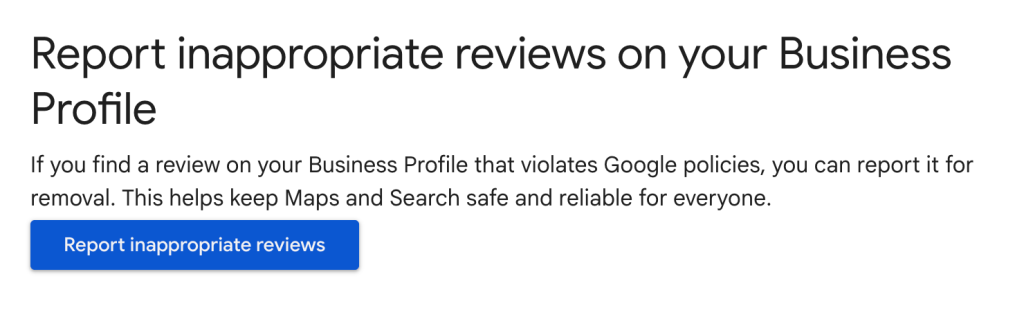
If you suspect a review is fake (from a competitor, from someone who never visited), respond professionally and then flag it for removal through Google. Do not accuse the reviewer of being fake in your response. Google sometimes removes these reviews, but even if they do not, a professional response limits the damage. I know that for a fact.
Building a Review Response System
For tourism businesses with multiple locations or high review volume, you need a system. Here is what I implement with clients:
- Daily monitoring: Someone checks all profiles every morning. This takes 10 to 15 minutes.
- Response tiers: Positive reviews can be handled by trained staff. Negative reviews go to a manager for review before posting.
- Template library: Create 5 to 10 template variations for common scenarios. Staff personalize these rather than writing from scratch.
- Response log: Track which reviews you have responded to and any follow-up actions needed.
- Weekly review: Look at review trends. If multiple people mention the same issue, that is operational feedback worth acting on.
Frequently Asked Questions
Should I respond to every single review?
Yes, with one exception. If you have hundreds of reviews and limited resources, prioritize: all negative reviews, positive reviews with specific details, and recent reviews. A brief thank you for short positive reviews is fine. But unanswered negative reviews should never happen.
What if a review is clearly fake or from a competitor?
Respond professionally as if it were real, then flag it for removal through Google Business Profile. Say something like “I was unable to find a reservation under your name. Please contact me directly at [email] so I can look into this.” This signals to other readers that the review may not be legitimate without making accusations.
How long should my responses be?
Match the length of the review. A one-sentence review gets a one to two sentence response. A detailed paragraph gets a more detailed response. Long responses to short reviews look desperate. Short responses to detailed reviews look dismissive.
Can review responses actually help my Google rankings?
There is a modest direct impact, as Google has confirmed engagement signals matter for local rankings. The bigger impact is indirect: better responses lead to more reviews, higher click-through rates, and better conversion. These all compound over time.
Should I respond differently to reviews on TripAdvisor versus Google?
The principles are the same, but TripAdvisor reviews tend to be longer and more detailed, so your responses should match. TripAdvisor also has a more travel-savvy audience who may notice generic responses more quickly. Google reviews are often shorter and from a broader audience. Adjust your tone and length accordingly.
Get a Review Response Audit
If your tourism business is leaving reviews unanswered or using responses that sound like they were written by a bot, you are losing bookings. I offer review audits that include analysis of your current response patterns, competitor comparison, and custom templates for your specific business. Get in touch to discuss how I can help.

About the Author
I’m Peter Sawicki, a Destination SEO Strategist helping tourism brands and DMOs grow their online presence through SEO, technical audits, and creative digital strategies. Over the years I’ve worked across multiple countries and markets, which gives me a global perspective on every project I take on. When I’m not optimizing websites, you’ll most likely find me underwater. Scuba diving is where my two biggest passions meet.