
Most hotel websites I audit have schema markup. The problem is they have the wrong schema, implemented incorrectly, or they are missing the types that actually move the needle for visibility in search results and AI answers.
After working with dozens of hospitality clients across the US, I have identified six schema types that consistently deliver measurable impact for hotels. Not theoretical impact. Real visibility improvements you can track in Search Console and monitor in AI search tools.
Schema Markup for Hotels in the United States
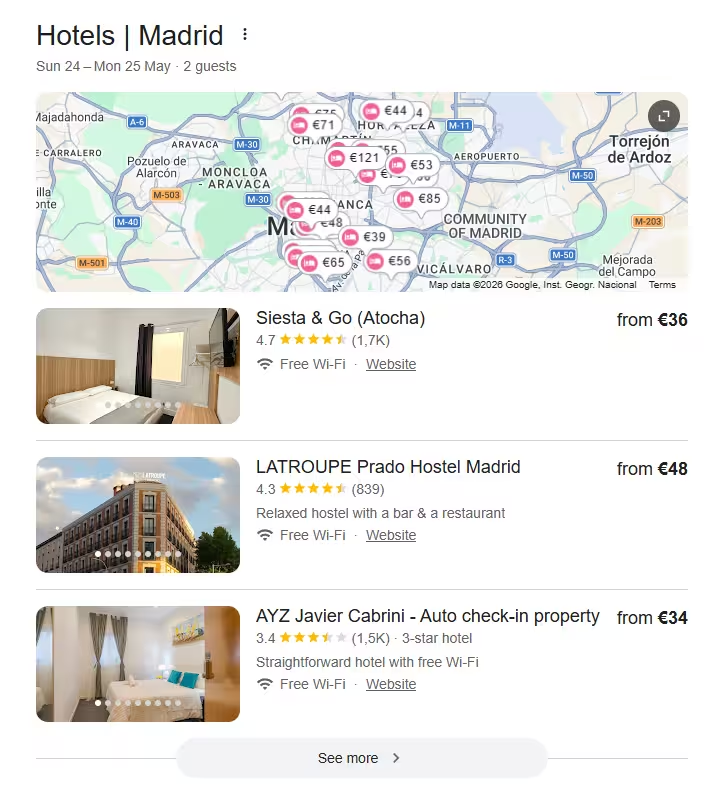
Hotels compete in one of the most visually rich search results environments that exists. Google shows prices, ratings, photos, availability calendars, and local pack results all on the same page. Schema markup is how you tell Google exactly what data to pull and display.
But there is a bigger shift happening. AI search tools like ChatGPT, Perplexity, and Google AI Overviews are pulling structured data to answer complex queries. When someone asks an AI “best hotels near Yellowstone with hot tubs under $200” the AI needs clean structured data to include your property in that answer.
Schema is no longer just about rich snippets. It is about being machine-readable in an AI-first search landscape.
1. Hotel and LodgingBusiness Schema
This is your foundation. The Hotel schema type (or the broader LodgingBusiness for motels, B&Bs, and resorts) tells search engines the essential facts about your property: name, address, star rating, check-in times, amenities, and price range.
Why It Matters
Google uses this data to populate the Knowledge Panel that appears when someone searches your hotel name directly. Without clean Hotel schema, Google pulls this information from third-party sources like TripAdvisor or Booking.com, and those sources often have outdated or incorrect details.
I worked with a boutique hotel in Austin that had the wrong check-in time displayed in their Knowledge Panel for eight months. Guests were showing up at 1pm when check-in was actually 3pm. The fix was adding explicit Hotel schema with the correct openingHours property.
Common Mistake to Avoid
Listing amenities you no longer offer. I see this constantly with hotels that added “free breakfast” during COVID promotions and never removed it from their schema. Google may display this in rich results, guests expect it, and you have a front desk problem. Audit your amenity list quarterly.
2. FAQPage Schema
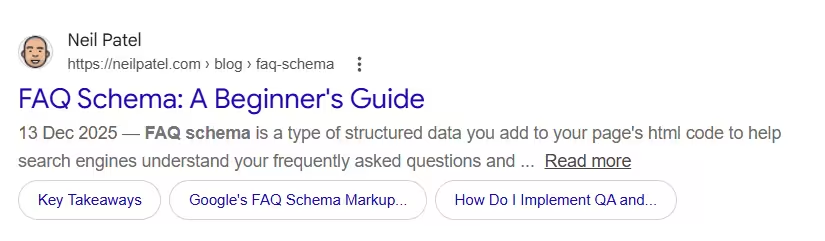
The FAQ format allowed content to be presented in a question-and-answer format, so that it could appear as expandable results directly in search results. This was particularly useful for hotels, as travelers often ask the same questions: about parking fees, pet policies, airport shuttle schedules, or pool hours. Unfortunately, it doesn’t work anymore…
Critical Update: FAQ Schema Changes Effective 2026
Google announced in late 2024 that FAQ rich results will be significantly restricted starting in 2026. The change limits FAQ rich results display to only high-authority government and health websites for most queries. For hotels, this means your FAQ schema will no longer generate those expandable results in standard search.
However, and this is important, the schema itself remains valuable. AI systems and voice assistants still read and use FAQPage structured data even when Google does not display it visually. I recommend hotels continue implementing FAQ schema for machine readability, but stop optimizing specifically for the rich result appearance.
Common Mistake to Avoid
Creating fake FAQs that no one actually asks. I have seen hotel FAQ schema with questions like “Why is this hotel the best in the city?” Google’s systems are sophisticated enough to recognize promotional content disguised as FAQs. Use real questions from your front desk, your reviews, and your contact form submissions.
3. AggregateRating Schema (Third-Party Reviews Only)
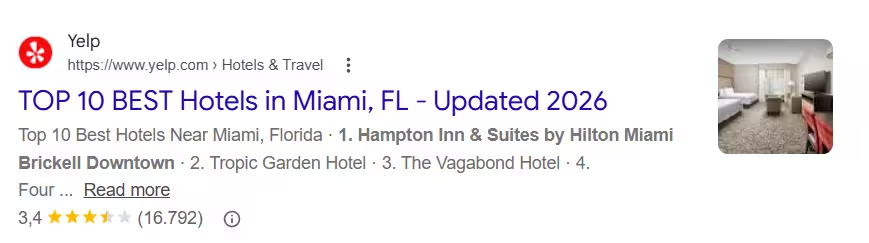
Star ratings in search results catch eyes and drive clicks. AggregateRating schema tells Google your review score and the number of reviews it is based on.
Why It Matters
Listings with star ratings have significantly higher click-through rates than those without. For hotels, where the decision often comes down to comparing three or four similar properties, that visual star rating can be the deciding factor.
The Critical Restriction
Google explicitly prohibits self-serving review markup. You cannot use AggregateRating schema to display reviews you collected yourself on your own website. The ratings must come from a third-party, independent platform like Google Reviews, TripAdvisor, or Booking.com.
The technical implementation typically involves either pulling from Google’s API or using a reviews aggregation service that provides the schema markup as part of their widget. If you display TripAdvisor reviews on your site through their official widget, that widget should include compliant schema.
Common Mistake to Avoid
Marking up your own guest testimonials as reviews. I audit hotel sites every month that have AggregateRating schema pointing to a “testimonials” page with five hand-picked glowing reviews. This violates Google’s guidelines and can result in a manual action that removes all your rich results, not just the ratings.
4. Restaurant Schema
If your hotel has an on-site restaurant, bar, or even a notable breakfast service, Restaurant schema is a separate opportunity most hotels ignore completely.
Why It Matters
Your restaurant can rank independently for dining-related searches. “Best brunch in downtown Denver” or “restaurants open late near convention center” are queries where your hotel restaurant could appear, driving awareness and bookings from people who were not even looking for a hotel.
I helped a resort in Florida implement Restaurant schema for their three on-site dining options. Within four months, their steakhouse was appearing in local pack results for “fine dining near [beach name]” bringing in guests who discovered the hotel through the restaurant, not the other way around.
Common Mistake to Avoid
Forgetting to update hours and menus seasonally. Restaurant schema often includes menu references and operating hours. Hotels with seasonal hour changes or rotating menus need a process to update this schema regularly. Showing winter hours in July or a menu item you discontinued six months ago damages trust.
5. BreadcrumbList Schema
Breadcrumb schema seems basic, but it is one of the most overlooked opportunities I see on hotel websites.
Why It Matters
Breadcrumbs help Google understand your site hierarchy. For hotels that are part of a brand or a collection, breadcrumbs communicate the relationship: Brand > Region > City > Property. This helps Google understand topical relevance and can improve rankings for location-based queries.
The visual benefit is cleaner search results. Instead of showing your full URL path, Google displays the breadcrumb trail, which is more readable and helps users understand where they will land before clicking.
Common Mistake to Avoid
Inconsistent breadcrumb structure across the site. I see hotel websites where the rooms page shows “Home > Rooms > Deluxe Suite” but the dining page shows “Home > Dining” without the intermediate category. Keep your hierarchy consistent across all page types. If you have a “Hotel Experience” section, use it in breadcrumbs for all child pages.
6. Event Schema
Event schema marks up happenings at your property: live music nights, holiday brunches, wine tastings, wedding showcases, conferences you are hosting.
Why It Matters
Events appear in Google’s event search experience, which is a completely separate discovery channel most hotels never tap into. When someone searches “things to do this weekend in Nashville” your jazz night or rooftop party can appear alongside concerts and festivals.
For hotels that host conferences or business events, this becomes even more valuable. “Tech conferences in Austin 2025” results pull from Event schema. If you are the venue, you can appear in those results and capture traffic from attendees looking for where to stay.
Common Mistake to Avoid
Leaving old events marked up after they have passed. Google specifically warns against marking up events that have already occurred. Some hotels add Event schema once and never remove it, leaving schema for a New Year’s Eve party from two years ago still on their site. This can trigger structured data warnings in Search Console and erode your overall schema credibility with Google’s systems.
Schema Markup for Hotels in the United States – Implementation
If you are starting from zero or auditing existing implementation, here is how I prioritize schema for hotels in the United States:
- Phase 1 (Immediate): Hotel/LodgingBusiness and BreadcrumbList. These are foundational and relatively simple to implement correctly.
- Phase 2 (Within 30 days): FAQPage and Restaurant (if applicable). FAQ provides immediate rich result benefits until the 2026 changes, and Restaurant opens a new traffic channel.
- Phase 3 (Within 60 days): AggregateRating through a compliant third-party integration. This requires coordination with your reviews provider.
- Phase 4 (Ongoing): Event schema as you have events worth promoting. This should be part of your marketing workflow, not a one-time implementation.

Schema Markup for Hotels – Testing and Validation
Every schema implementation should be validated before deployment using Google’s Rich Results Test tool. This tells you whether your markup is eligible for rich results and flags any errors or warnings.
After deployment, monitor Google Search Console’s Enhancements reports. Google groups schema issues by type, so you can quickly see if your markup has problems across multiple pages.
For ongoing monitoring, I use both Google Search Console and tools like Schema App or Merkle’s Schema Markup Generator to maintain consistency as hotel websites grow and change.
Frequently Asked Questions
Does schema markup directly improve rankings for hotels?
Schema does not directly boost rankings in the traditional sense. Google has been clear about this for years. What schema does is make your content eligible for rich results, which improve click-through rates, and make your data consumable by AI systems, which improves visibility in AI answers. Both of these indirectly impact your organic performance.
Should hotels use JSON-LD or Microdata for schema markup?
JSON-LD is the clear choice for hotels in 2026. It is Google’s preferred format, easier to implement and maintain, and does not require modification of your page HTML structure. Microdata still works but creates maintenance headaches, especially when you need to update information. I have not recommended Microdata to a client in over five years.
How do I add schema markup if I use a booking engine like SiteMinder or Cloudbeds?
Most modern booking engines inject their own schema for availability and offers. Your job is to ensure your website CMS handles the static Hotel schema while the booking engine handles the dynamic pricing and availability schema. Coordinate with your booking provider to avoid duplicate or conflicting markup. Many will provide documentation on exactly what schema they inject and where.
Can I use schema markup to show my best room rate in search results?
Technically yes, using Offer schema nested within your Hotel schema. However, Google’s hotel search experience pulls pricing primarily from its own Hotel Ads and metasearch connections, not from on-page schema. Schema-based pricing is more relevant for direct booking landing pages and AI answer systems than for Google’s main hotel search results. Focus on Hotel Ads integration if rate display is your priority.
What happens if I have schema errors on my hotel website?
Minor errors typically just prevent the rich result from displaying. Major errors or spam violations can result in manual actions that affect your entire site. Google sends notifications through Search Console for serious issues. The most common problems I see are missing required fields (like @type or name) and markup on content that does not match what is visible on the page. Both are fixable with an audit and some attention to detail.
Schema Markup for Hotels in the United States
Schema markup is technical work, but it is technical work with real business impact. The difference between a hotel that implements these six schema types correctly and one that ignores structured data is measurable in click-through rates, Knowledge Panel accuracy, and increasingly in AI answer inclusion.
If you are not sure where your hotel stands, I offer technical SEO audits that include a complete schema assessment with specific implementation recommendations. Get in touch through my contact page and let us make sure search engines and AI systems understand exactly what your property offers.

About the Author
I’m Peter Sawicki, a Destination SEO Strategist helping tourism brands and DMOs grow their online presence through SEO, technical audits, and creative digital strategies. Over the years I’ve worked across multiple countries and markets, which gives me a global perspective on every project I take on. When I’m not optimizing websites, you’ll most likely find me underwater. Scuba diving is where my two biggest passions meet.