
Your destination is either showing up in ChatGPT, Perplexity, and Google AI Overviews, or it is not. The problem is that most tourism websites have no idea which one it is. They are still obsessing over traditional rankings while an entirely new visibility layer has emerged, one that directly shapes how travelers discover and choose destinations.
I have spent the last 18 months helping tourism clients understand this shift. The tracking methods are still primitive compared to what we have for traditional SEO, but they work. Here is how to measure AI visibility without spending a fortune, and what actually matters when you start looking at the data.
Why Traditional SEO Metrics Miss the AI Picture?
Google Search Console does not tell you when your destination appears in an AI Overview. Your rank tracker does not know if ChatGPT recommends your region for adventure travel. These tools were built for a different era of search.
When I audited a Caribbean DMO last quarter, they had strong traditional rankings for their target keywords. But when I ran the same queries through ChatGPT and Perplexity, their destination was mentioned in only 12% of relevant responses. A competing island with weaker SEO appeared in 67% of the same AI answers. The traditional metrics were telling a false story of success.
This gap exists because AI systems pull from different sources, weight information differently, and synthesize answers rather than just ranking pages. Your visibility in one does not guarantee visibility in the other.
Free Methods for Tracking AI Visibility
Manual Prompt Testing
The most reliable free method is systematic manual prompting. Yes, it takes time. Yes, it is tedious. But it gives you ground truth that no automated tool can match yet.
Build a prompt library covering your key traveler intents:
- Destination discovery: “Best destinations for [activity] in [region]”
- Trip planning: “Where should I stay in [destination] for [traveler type]”
- Comparison queries: “[Your destination] vs [competitor] for [activity]”
- Specific attractions: “Top things to do in [destination]”
- Seasonal queries: “Best time to visit [destination]”
Run these prompts through ChatGPT, Claude, Perplexity, and Google’s AI Overview every two weeks. Document whether your destination appears, in what context, with what sentiment, and what sources are cited.
I use a simple spreadsheet with columns for date, platform, prompt, mention (yes/no), position in response, sentiment, and cited sources. After three months, patterns emerge that tell you exactly where you are strong and where you are invisible.
Brand Monitoring Adaptations
Tools you might already use for social listening can be adapted for AI visibility tracking. Set up alerts for your destination name combined with AI platform mentions. When someone shares a ChatGPT response about travel on social media, you want to know if your destination appears.
This is indirect measurement, but it captures real user interactions with AI recommendations. I have seen destinations discover they were being recommended for the wrong reasons through this method, which is valuable competitive intelligence you would not get from direct testing alone.
Google AI Overview Monitoring
For Google specifically, you can track AI Overview appearances manually or use browser extensions that flag when your target keywords trigger AI responses. Check whether your content is being cited, whether your destination is mentioned, and how prominently.
SEO strategy fundamentals still matter here because Google’s AI Overviews pull heavily from traditionally optimized content. But the relationship is not one to one.
Paid Tools for AI Visibility Tracking
Dedicated GEO/AEO Platforms
Several tools have emerged specifically for tracking AI visibility. Profound, Otterly, and similar platforms automate the prompt testing process across multiple AI systems. They track mentions, citations, and sentiment over time.
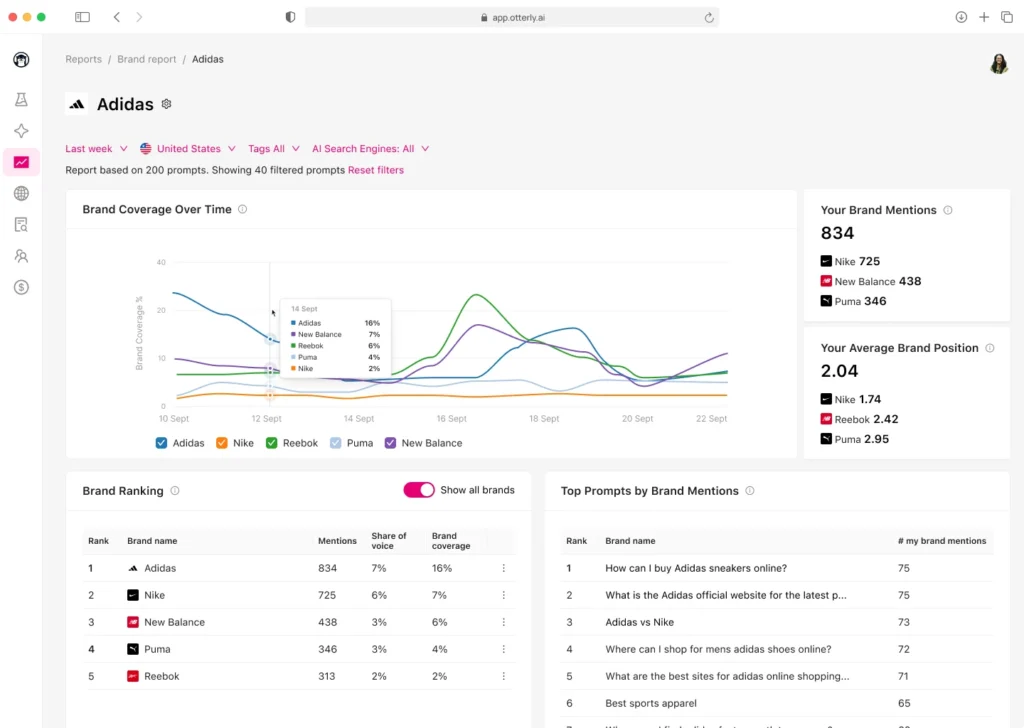
These tools range from a few hundred to several thousand dollars monthly depending on the number of tracked queries and platforms. For DMOs managing multiple markets or languages, the automation pays for itself in time savings alone.
When evaluating these platforms, focus on:
- Which AI platforms they actually monitor (some only track ChatGPT)
- Whether they capture cited sources, not just mentions
- How they handle multilingual tracking if you market internationally
- Historical data depth for trend analysis
Enterprise SEO Platforms Adding AI Tracking
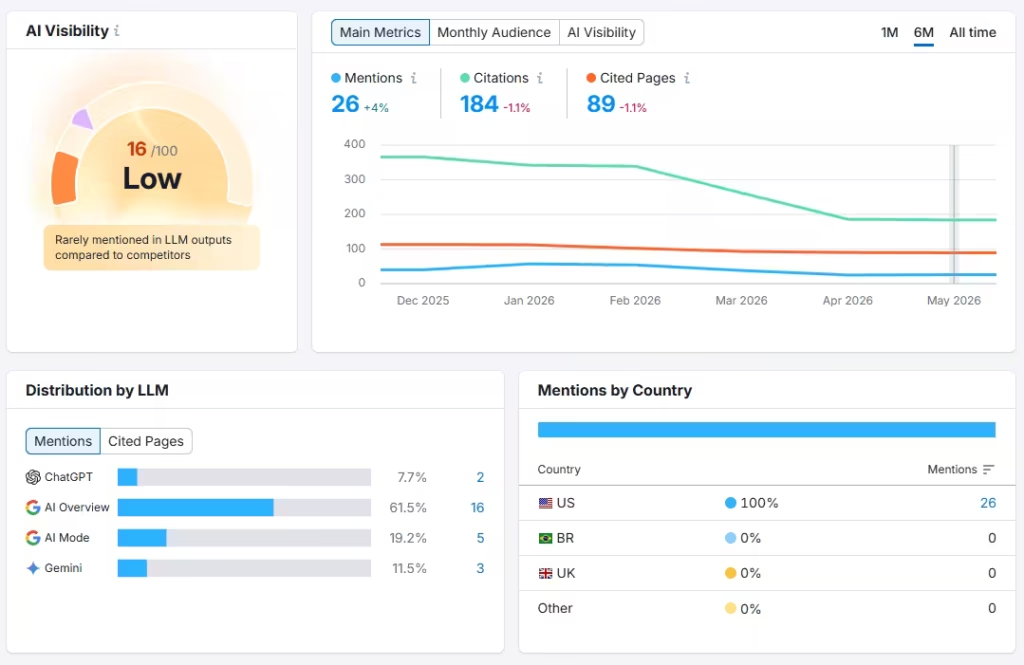
Semrush, Ahrefs, and other major platforms are adding AI visibility features. These are currently limited compared to dedicated tools, but they integrate with your existing SEO workflows. If you are already paying for these platforms, check what AI tracking capabilities they have added recently.
The advantage of these integrated tools is that you can correlate AI visibility with traditional SEO metrics in a single dashboard. The disadvantage is that their AI features are often afterthoughts, not core products.
The KPIs That Actually Matter
Share of Voice in AI Responses
This is your most important metric. For a set of target queries relevant to your destination, what percentage of AI responses mention you? Track this across platforms and over time.
When I work with DMO clients, I establish a baseline share of voice across 50-100 target queries. Then we track movement monthly. A destination I worked with in Central America moved from 18% to 41% share of voice over six months through targeted content optimization. That movement correlated with a measurable increase in destination awareness in their target markets.
Citation Frequency and Sources
When AI systems cite sources for their recommendations, which pages are they pulling from? Is it your official destination content, a third-party travel blog, or Wikipedia?
This metric tells you where to focus optimization efforts. If AI systems consistently cite third-party content about your destination, you need to either improve your own content to outcompete it or work with those third parties to ensure accurate information.
Sentiment and Context
Appearing in AI responses is not enough. A destination appearing in the context of “places to avoid” or “overpriced tourist traps” is worse than not appearing at all.
Track not just mentions but the sentiment and context of those mentions. Are you being recommended as a top choice, mentioned as an alternative, or listed with caveats? This qualitative layer matters more than raw mention counts.
Competitive Comparison
Track your competitors with the same rigor you track yourself. When AI recommends alternatives to your destination, who appears? When travelers ask comparison questions, how do you stack up?
Competitive analysis for destinations has always been important, but AI visibility adds a new dimension. Your competitor might rank below you in traditional search while dominating AI recommendations.
Building Your Tracking System
Start Small and Expand
Do not try to track everything at once. Begin with 20-30 core queries that represent your most important traveler intents. Master tracking those before expanding.
For a regional DMO I consulted with last year, we started with just 25 queries covering their primary markets and activities. Only after establishing reliable tracking processes did we expand to 150 queries covering secondary markets and long-tail intents.
Establish Tracking Cadence
AI responses change frequently. Weekly tracking is ideal for competitive queries, bi-weekly for secondary queries, and monthly for long-tail terms. Consistency matters more than frequency.
Build tracking into someone’s regular workflow rather than treating it as a special project. If it does not become routine, it will not happen consistently.
Connect AI Visibility to Business Outcomes
This is where most tracking efforts fail. Teams collect AI visibility data but cannot connect it to actual destination performance.
Build correlations between AI visibility changes and:
- Website traffic from AI platform referrals
- Branded search volume trends
- Visitor arrivals where data is available
- Partner booking inquiries
These correlations are imperfect, but they move AI visibility tracking from an interesting metric to a business-relevant one.
AI optimization for tourism requires this business case connection to secure ongoing resources and organizational buy-in.
Common Tracking Mistakes to Avoid
Testing only positive queries is a common error. Track queries where you expect not to appear, queries where competitors should dominate, and queries where you want to grow visibility. The gaps tell you more than the wins.
Another mistake is ignoring platform differences. ChatGPT, Claude, and Perplexity give different answers to identical prompts. Google AI Overviews operate differently still. A destination strong on one platform may be invisible on another. Track each separately.
Finally, avoid treating AI visibility as a separate initiative from SEO. The two are deeply connected. Your tracking system should integrate AI metrics with traditional SEO performance, not create a parallel universe of data.
Frequently Asked Questions
How often do AI responses change for the same query?
More often than most people realize. I have seen ChatGPT responses for identical travel queries change substantially within the same week, especially for time-sensitive topics. This is why consistent tracking over time matters more than single snapshots. Trends tell the real story.
Should I track AI visibility in multiple languages?
If you market to multilingual audiences, absolutely. AI responses vary significantly by language, and your visibility in English tells you nothing about your visibility in Spanish, German, or Mandarin. I have seen destinations dominate English-language AI responses while being completely absent in other languages where they actively market.
What is a good benchmark for AI share of voice?
This varies by destination size and competitive landscape. For major destinations, 40-60% share of voice for relevant queries is strong. For smaller or emerging destinations, 15-25% is a reasonable initial target. More important than absolute numbers is movement over time and comparison to direct competitors.
Can I track AI visibility without any paid tools?
Yes, but it requires discipline and time investment. Manual prompt testing with systematic documentation works. The limitation is scale. You can realistically track 50-100 queries manually with bi-weekly cadence. Beyond that, automation becomes necessary.
How do I know which queries to track?
Start with your existing SEO keyword research and adapt it for conversational AI queries. Focus on discovery queries where travelers are choosing between destinations, planning queries where they are making decisions about your destination, and comparison queries where you compete directly with alternatives. Your website analytics showing which searches drive qualified traffic is a good starting point.
Getting Started Today
AI visibility tracking is not optional for destinations that want to remain competitive in how travelers discover and choose where to go. The tools and methods are still evolving, but waiting for perfect solutions means falling behind competitors who are measuring and optimizing now.
If you want help establishing an AI visibility tracking system for your destination, or if you need an audit of where you currently stand in AI recommendations, reach out for a consultation. I have built these systems for DMOs across multiple markets and can help you skip the trial-and-error phase.

About the Author
I’m Peter Sawicki, a Destination SEO Strategist helping tourism brands and DMOs grow their online presence through SEO, technical audits, and creative digital strategies. Over the years I’ve worked across multiple countries and markets, which gives me a global perspective on every project I take on. When I’m not optimizing websites, you’ll most likely find me underwater. Scuba diving is where my two biggest passions meet.