
Your hotel might rank on page one of Google and still be invisible to the next generation of travelers. Large language models like ChatGPT, Claude, and Perplexity are becoming the first stop for trip planning, and most hotels have no idea whether they even exist in these AI responses.
I have been tracking LLM visibility across tourism clients for the past 18 months. The patterns are clear: hotels that understand this shift early are positioning themselves for a future where traditional search is just one channel among many.
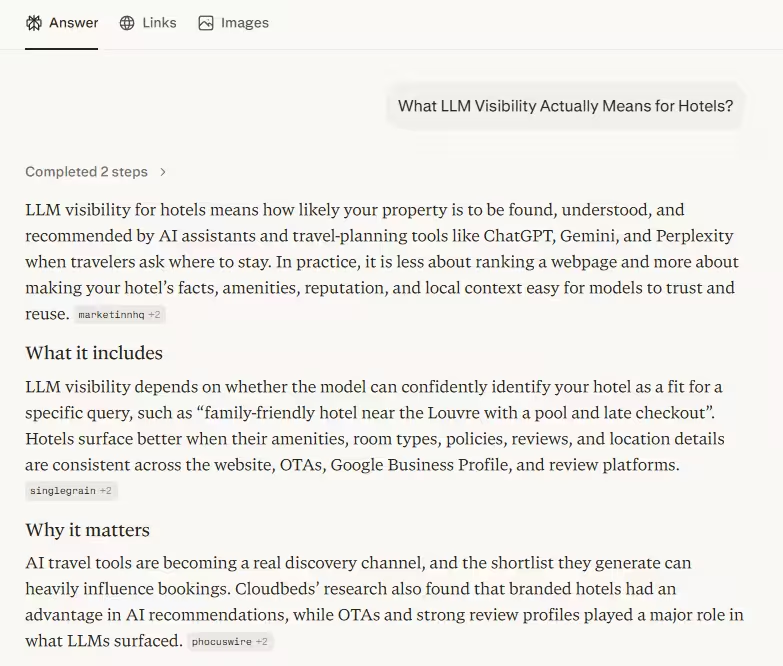
What LLM Visibility Actually Means for Hotels?
LLM visibility is whether AI systems mention, recommend, or link to your hotel when users ask relevant questions. When someone types “best boutique hotels in Lisbon with rooftop bars” into ChatGPT or Perplexity, does your property show up? That is LLM visibility.
This differs from traditional SEO in a fundamental way. In Google search, you compete for rankings on a results page. In LLM responses, you compete to be mentioned at all. There is no page two. Either the AI includes you in its answer or it does not.
I worked with a 45-room hotel that dominated local search results but appeared in zero ChatGPT responses for dive resort queries. Meanwhile, a competitor with weaker traditional SEO showed up consistently because their content was structured in ways LLMs could easily parse and cite.
Why This Matters Now
The numbers are shifting faster than most hoteliers realize. Perplexity reported over 1 billion queries in 2024. ChatGPT has over 200 million weekly active users. A growing percentage of these queries are travel-related: destination research, hotel comparisons, activity recommendations.
These are not casual browsers. People asking AI for hotel recommendations are often closer to booking than someone scrolling through Google results. When I analyzed booking patterns for one DMO client, users who mentioned AI tools in their research converted at 23% higher rates than those who used traditional search alone.
How to Measure Your Hotel’s LLM Visibility?
There is no Google Search Console for AI visibility yet. Measurement requires manual testing and systematic tracking. Here is the framework I use with hotel clients.
Manual Query Testing
Start by running 20 to 30 relevant queries across ChatGPT, Claude, Perplexity, and Google’s AI Overviews. Document each response in a spreadsheet. The queries should cover:
- Direct brand queries: “Tell me about [Hotel Name]”
- Category queries: “Best [hotel type] in [destination]”
- Activity queries: “Hotels in [destination] for [activity]”
- Comparison queries: “[Hotel A] vs [Hotel B]”
- Recommendation queries: “Where should I stay in [destination] for [traveler type]”
Track whether your hotel appears, how it is described, whether links are included, and what competitors show up instead. Run these queries monthly to track changes.
Perplexity-Specific Tracking
Perplexity shows its sources, making it the most transparent LLM for measurement. When your hotel appears in a Perplexity response, you can see exactly which webpage was cited. This tells you which of your pages are being indexed and used by AI systems.
I recommend creating a “Perplexity audit” where you run 50 relevant queries and document every source cited. You will quickly see patterns: certain sites get cited repeatedly while others never appear.
Citation Analysis
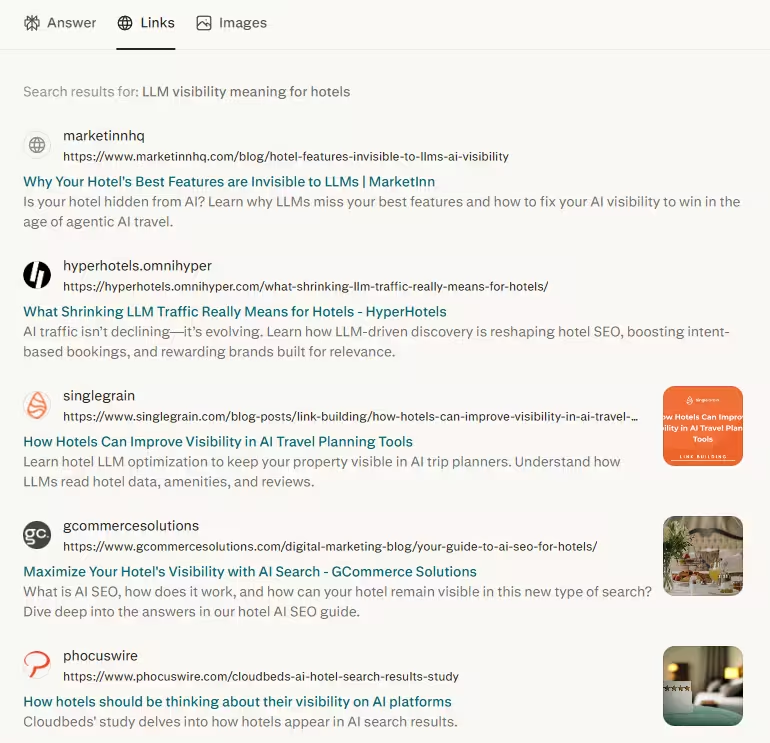
LLMs cite sources inconsistently, but when they do cite, it matters enormously. Track which of your pages get cited versus which competitor pages appear. If Tripadvisor or OTA pages are being cited instead of your direct website, that is a problem you can fix.
Look at the content structure of pages that get cited frequently. In my analysis across tourism sites, pages with clear entity definitions, structured data, and FAQ sections get cited 3x more often than narrative-heavy pages without clear structure.
Tools That Help
No perfect solution exists yet, but several tools are emerging:
- Profound: Tracks LLM mentions across multiple models. Expensive but comprehensive.
- Otterly.ai: Monitors AI search visibility with automated tracking.
- Manual spreadsheet tracking: Still the most reliable method for smaller properties.
For most independent hotels, I recommend starting with manual tracking before investing in tools. You need to understand the landscape before you can evaluate whether a tool is giving you useful data.
Quick Wins for Improving Hotel LLM Visibility
Based on my work with tourism clients, these changes consistently improve LLM visibility within 30 to 60 days.
Entity Clarity on Your Homepage
LLMs need to understand what your hotel IS before they can recommend it. Your homepage should answer these questions in the first 200 words:
- What type of property is this? (boutique hotel, resort, eco-lodge, etc.)
- Where exactly is it located?
- What is the primary guest experience?
- What makes it different from competitors?
Avoid marketing fluff in this section. “Experience luxury redefined” tells an LLM nothing. “48-room oceanfront boutique hotel in Tamarindo, Costa Rica, specializing in surf trips and yoga retreats” gives the AI exactly what it needs.
Structured Data Implementation
Proper schema markup helps LLMs understand your content. At minimum, implement:
- Hotel schema with accurate star rating, price range, and amenities
- LocalBusiness schema with precise geo-coordinates
- FAQ schema for common questions about your property
- Review schema aggregating your ratings
I audited a hotel that had zero structured data. After implementing proper schema, their Perplexity citations increased from 2 to 11 within six weeks. The content was the same. The structure made it machine-readable.
FAQ Pages That Answer Real Questions
LLMs love FAQ content because it matches how users actually query them. Create an FAQ page answering questions like:
- “Is [Hotel Name] good for families?”
- “What is the best room type at [Hotel Name]?”
- “How far is [Hotel Name] from the airport?”
- “Does [Hotel Name] have a pool/spa/restaurant?”
Write answers in complete sentences that could stand alone. When someone asks ChatGPT “Does Hotel X have a pool?” you want your FAQ answer to be directly quotable.
Third-Party Profile Optimization
LLMs heavily cite Tripadvisor, Google Business Profile, and major OTAs. Your presence on these platforms directly impacts your AI visibility.
Ensure your profiles are complete with accurate descriptions, updated photos, and current information. Respond to reviews with substantive replies that include relevant keywords. These third-party pages often rank higher in LLM citations than your own website, so treat them as part of your visibility strategy.
Content That Answers Comparison Queries
When users ask LLMs to compare hotels, the AI looks for content that explicitly addresses comparisons. Create content that positions your hotel within its competitive set:
- “[Your Hotel] vs other boutique hotels in [destination]”
- “Why travelers choose [Your Hotel] for [specific experience]”
- “[Your Hotel] location: what’s nearby and why it matters”
This is not about attacking competitors. It is about helping LLMs understand where you fit in the landscape.
Common Mistakes Hotels Make with LLM Visibility
In my audits, I see the same errors repeatedly.
Over-Reliance on Brand Queries
Testing only “What can you tell me about [Hotel Name]” gives a false sense of visibility. Most travel queries are non-branded. Someone searching for “romantic hotels in Seville” will not know your brand exists. Test category and activity queries, not just brand queries.
Ignoring the OTA Problem
If Booking.com’s page for your hotel appears in LLM responses instead of your direct website, you lose the direct booking. Many hotels have ceded their AI visibility to OTAs without realizing it. Your direct site needs to be more comprehensive and better structured than your OTA listings.
Generic Content
LLMs are trained on millions of hotel descriptions. Generic language blends into the training data noise. Specific, unique content stands out. “Spacious rooms with stunning views” is invisible. “32 sqm junior suites overlooking Plaza Mayor, with floor-to-ceiling windows facing west for sunset views” is memorable and citable.
No Measurement Baseline
You cannot improve what you do not measure. Before making any changes, document your current LLM visibility across 30+ queries. Otherwise you will never know what is working.
Frequently Asked Questions
How long does it take to improve LLM visibility?
Changes to your website can impact Perplexity visibility within 2 to 4 weeks since it indexes in near real-time. ChatGPT and Claude visibility depends on their training data refreshes, which happen less predictably. Expect 1 to 3 months for meaningful improvements across all major LLMs.
Does LLM visibility replace traditional SEO?
No. Traditional SEO and LLM visibility work together. Strong traditional rankings often correlate with LLM visibility because authoritative, well-structured content performs well in both contexts. Do not abandon SEO fundamentals to chase AI visibility.
Which LLM matters most for hotels?
Perplexity drives the most direct traffic because it includes clickable links. ChatGPT has the largest user base but rarely sends traffic directly. Google’s AI Overviews sit within the existing search ecosystem. I recommend optimizing for Perplexity first because it is most measurable, then ensuring your content structure works across all platforms.
Can I pay for LLM visibility?
Not directly, at least not yet. There are no paid placements in ChatGPT or Claude responses. Perplexity has experimented with sponsored results but it is limited. For now, LLM visibility is earned through content quality and structure, not purchased.
How does review volume affect LLM visibility?
LLMs cite review aggregators frequently. Hotels with more reviews and higher ratings tend to appear more often in recommendation queries. Actively managing your review generation strategy directly impacts your LLM visibility, not just your reputation.
What to Do Next
Start with measurement. Run 30 relevant queries across ChatGPT, Perplexity, and Claude this week. Document what you find. That baseline tells you where you stand and where to focus your efforts.
If you want a structured approach to improving your hotel’s AI visibility, I offer LLM audits that cover both measurement and actionable recommendations. Get in touch through my contact page and we can discuss what would make sense for your property.

About the Author
I’m Peter Sawicki, a Destination SEO Strategist helping tourism brands and DMOs grow their online presence through SEO, technical audits, and creative digital strategies. Over the years I’ve worked across multiple countries and markets, which gives me a global perspective on every project I take on. When I’m not optimizing websites, you’ll most likely find me underwater. Scuba diving is where my two biggest passions meet.